Endodontics vs Extraction: Which Option Is Best for Your Teeth? - Libral Traders
When faced with severe tooth pain or damage, patients often wonder whether to save their natural tooth or have it removed. Understanding the difference between Endodontics and tooth extraction can help you make an informed decision that protects your oral health and long-term well-being.
What Is Endodontics?
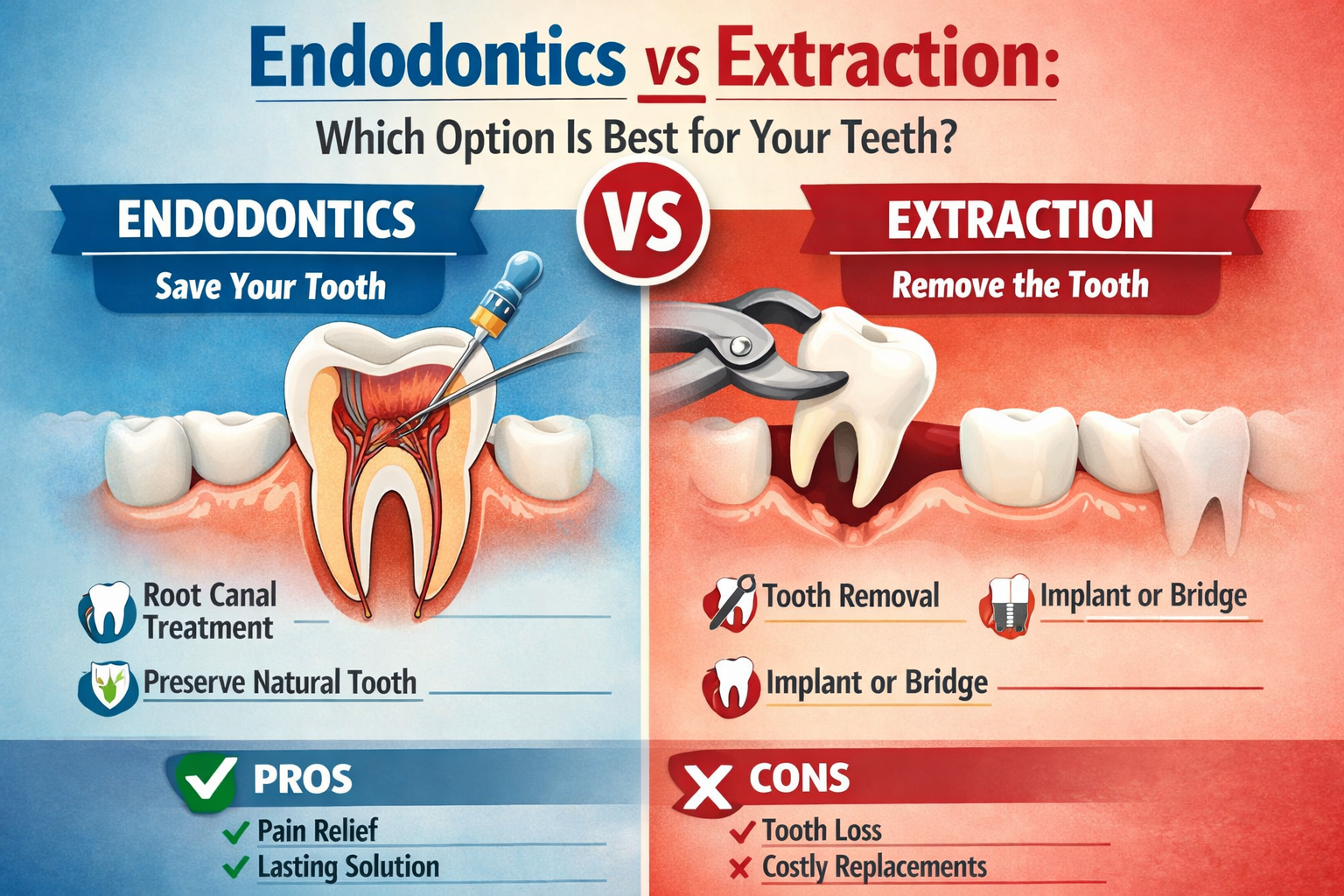
Endodontics is a specialized branch of dentistry focused on treating the inner tissues of the tooth, commonly through root canal therapy. This procedure removes infected or damaged pulp, cleans the inside of the tooth, and seals it to prevent further infection.
Modern Endodontics treatments are highly advanced, minimally invasive, and designed to preserve your natural tooth structure whenever possible.
What Is Tooth Extraction?
Tooth extraction involves completely removing a damaged or infected tooth from its socket. While it may provide quick relief from pain, it often requires additional treatments like dental implants, bridges, or dentures to restore function and appearance.
Endodontics vs Extraction: Key Differences
1. Tooth Preservation
- Endodontics: Saves your natural tooth
- Extraction: Removes the tooth entirely
2. Procedure and Recovery
- Endodontics: Less invasive with faster healing
- Extraction: May involve surgery and longer recovery
3. Cost Consideration
- Endodontics: Cost-effective in the long run
- Extraction: Additional costs for replacements
4. Function and Aesthetics
- Endodontics: Maintains natural bite and appearance
- Extraction: May affect chewing and alignment
When Is Endodontics the Better Choice?
Endodontics is usually recommended when:
- The tooth structure is still strong enough to be restored
- Infection is limited to the pulp
- You want to preserve your natural smile
Saving your natural tooth helps maintain jawbone strength and prevents neighboring teeth from shifting.
When Is Extraction Necessary?
Extraction may be the best option if:
- The tooth is severely damaged beyond repair
- There is advanced periodontal disease
- The tooth cannot support a restoration
In such cases, your dentist will suggest suitable replacement options to restore function.
Why Preserving Natural Teeth Matters
Natural teeth are always the best option when possible. Endodontics allows you to retain your original tooth, ensuring better chewing efficiency, natural appearance, and long-term oral health.
Libral Traders - Leading Dental Products Manufacturers
When it comes to maintaining dental equipment and ensuring precision in treatments like Endodontics, having access to reliable tools and supplies is essential. Libral Traders is known for offering quality dental products that support professionals in delivering accurate and effective restorative procedures.
Conclusion
Choosing between Endodontics and extraction depends on the condition of your tooth, overall oral health, and long-term goals. In most cases, Endodontics is the preferred option as it preserves your natural tooth and avoids additional procedures.
However, extraction may be necessary in more severe cases.Consulting with a qualified dental professional is the best way to determine the right treatment plan. With the right care and advanced solutions, you can restore your smile and maintain optimal dental health.
